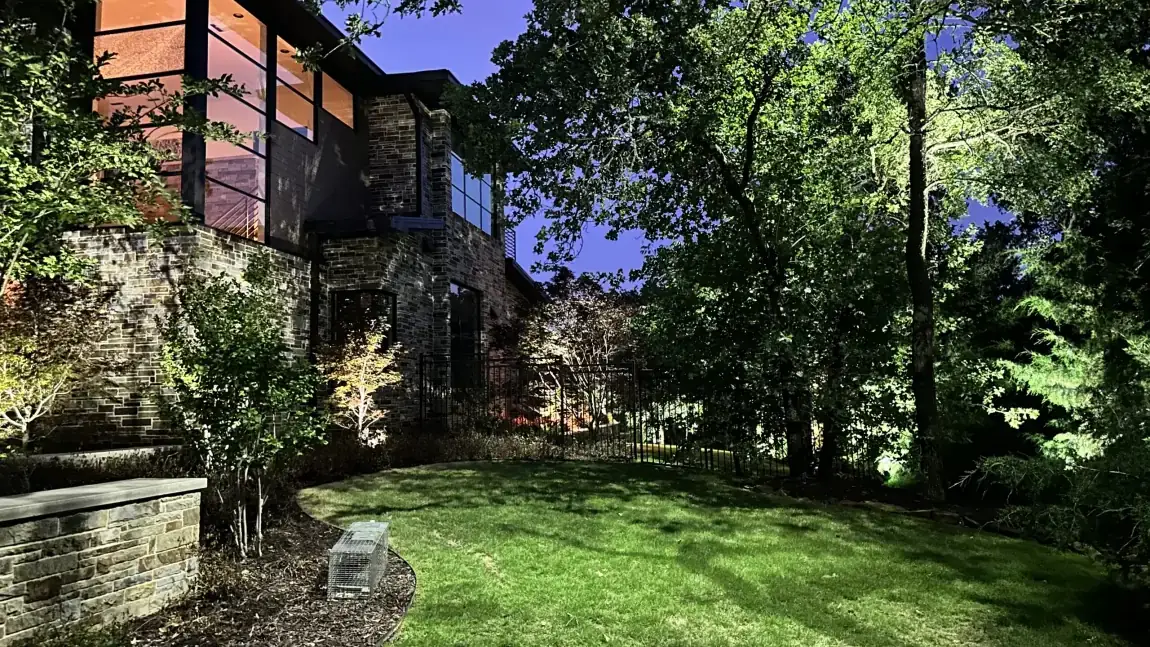
Landscape Lighting in Flower Mound, TX — Post Oak and Long Runs
Twenty-seven photographed projects here, more than anywhere except Preston Hollow. Sandy ground, fragile trees, and lots big enough to cause voltage problems.
Flower Mound sits north-west of Dallas, on the high ground between Grapevine Lake and Lewisville Lake, and it is the town outside Dallas where TC Lighting has the most work on the ground: twenty-seven photographed projects, every one shot after dark on the property.
It is also where the Metroplex changes underfoot. Flower Mound sits in the Eastern Cross Timbers, not the Blackland Prairie, and the difference is not academic. The soil is sandier and better drained, the native tree is post oak rather than live oak, and the lots are big enough that the electrical design stops being trivial.
Cross Timbers Sand Behaves Nothing Like Blackland Clay
Twenty minutes east, in Dallas, the ground is expansive clay that shrinks in drought and swells after rain and drags everything buried in it along for the ride. Flower Mound is mostly sandier Cross Timbers soil over the Woodbine formation, and it does almost none of that.
Two practical consequences, one good and one not:
- Fixtures hold their aim. Without the seasonal shrink-swell cycle, a properly set uplight stays pointed where it was pointed. Systems here need re-aiming noticeably less often than their equivalents in Dallas or Plano.
- But it erodes. Sandy soil sheds and moves on a slope, particularly on the properties backing onto the creeks and the slopes toward Lake Grapevine. A cable buried at a sensible depth on a graded bank can be sitting proud of the surface after a couple of heavy seasons, and the low line across a lawn is where the water goes.
So the depth discipline here is about erosion rather than ground movement, and the conduit argument is about the shovel and the slope rather than the clay. Cable that runs across a slope gets routed with the contour or buried deeper than the rule of thumb, and we look at where water leaves the property before deciding where wire crosses it.
Post Oak Is the Most Easily Killed Tree in the Metroplex
Flower Mound's character comes largely from its post oak and blackjack oak, and the town's reputation for protecting its trees is well earned. It is worth understanding why an installer needs to care, beyond the obvious.
Post oak has a shallow, wide-spreading root system that can extend well past the edge of the canopy, and it is unusually intolerant of disturbance. Cutting roots inside the dripline, changing the grade over them, or compacting the soil with equipment can all start a decline that takes three or four years to become visible — long after anybody would connect it to a trench. They are also slow growers that transplant badly, so a mature one lost is lost for a generation.
What that means for the work:
- Wire routes around driplines rather than through them, even when that means a considerably longer run.
- Where something must pass near a tree, it goes in by the least invasive method available rather than the fastest.
- Tree-mounted fixtures and their cable are fitted so nothing girdles the limb as it grows, and the hardware is checked on later visits.
- The design is drawn around the trees that are there, which sometimes means telling a client that the fixture position they want is the one position we should not use.
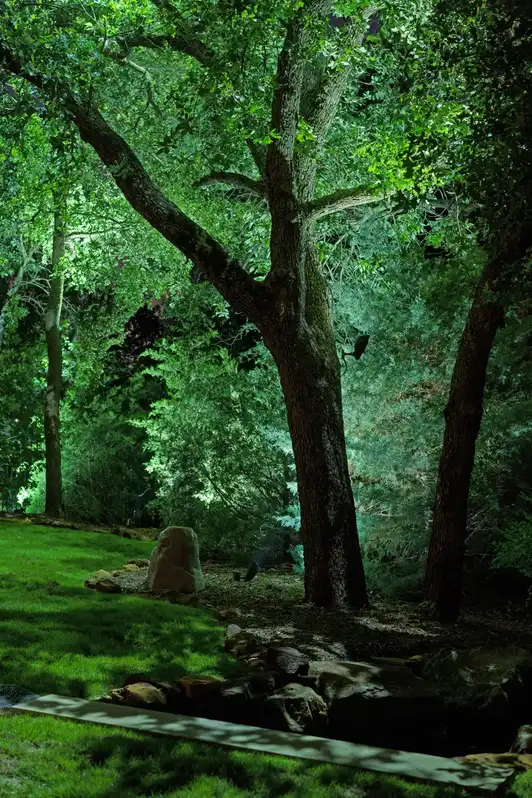
Lighting-wise, post oak is a different subject from a live oak. The crown is more open and the limbs are crooked and characterful, so the branch structure is the feature — it takes uplighting far better than it takes downlighting, which is the reverse of the Dallas approach. The town sets its own tree rules; confirm current requirements for your property with Flower Mound before anybody starts.
On an Acre Lot, Voltage Drop Is the Real Design Problem
This is the part nobody thinks about until the far end of the garden looks dimmer and warmer in colour than the near end, and it is the most common technical fault we find on large Flower Mound properties built by somebody else.
Low-voltage cable loses voltage along its length. On a small lot the loss is trivial. On an acre-plus property with runs of two, three or four hundred feet from the transformer, a run sized by habit rather than calculation arrives at the far fixture meaningfully below where it should be. Old halogen lamps showed this dramatically by going dim and orange; LED drivers mask it until they fall off a cliff and start flickering or simply not striking.
Getting it right is arithmetic done before anything is buried:
- Heavier cable on the long runs. The gauge is chosen for the run, not bought by the reel for the whole job.
- Hub and home-run layouts rather than one long daisy chain. A chain drops progressively; a hub feeds a cluster at a common voltage.
- The transformer placed where the load is, which on a big lot is often not beside the house. Sometimes the right answer is more than one.
- Capacity left spare. Properties this size get added to — a pool, an outbuilding, a new bed — and a transformer loaded to its limit on day one is a rebuild waiting to happen.
An Eight-Year-Old Canopy and an Eighty-Year-Old One Are Not the Same Job
Flower Mound has both, sometimes on the same street. Stands of old post oak that predate the town's growth sit a few hundred metres from developments where the trees went in with the houses in the last decade or two. The plan that suits one is wrong for the other, and this is where a lot of disappointing new-build lighting comes from.
On an established lot, the trees carry the design. Fixtures go up into mature crowns, the light comes down through the branches, and the house is the backdrop to a canopy that is doing the work. It looks like moonlight because the tree is big enough to make a shadow worth having.
On a newer lot, that layer does not exist yet and pretending otherwise produces a thin, spotty result. The design has to lean on what is actually there: the architecture, the hardscape, the pool surround, the garden walls and the graded levels, with specimen uplighting on the young trees at a level appropriate to their size rather than blasting them. Done properly it looks deliberate rather than sparse.
The part worth planning for is that the young lot becomes the established lot. Trees planted with a house in 2012 are getting genuinely useful by the mid-2020s. If the wiring was laid with that in mind — capacity in the transformer, a spare run toward the trees that will matter later — adding the downlight layer when the canopy arrives is an afternoon. If it was not, it is a trench through an established garden.
Photographed After Dark in Flower Mound
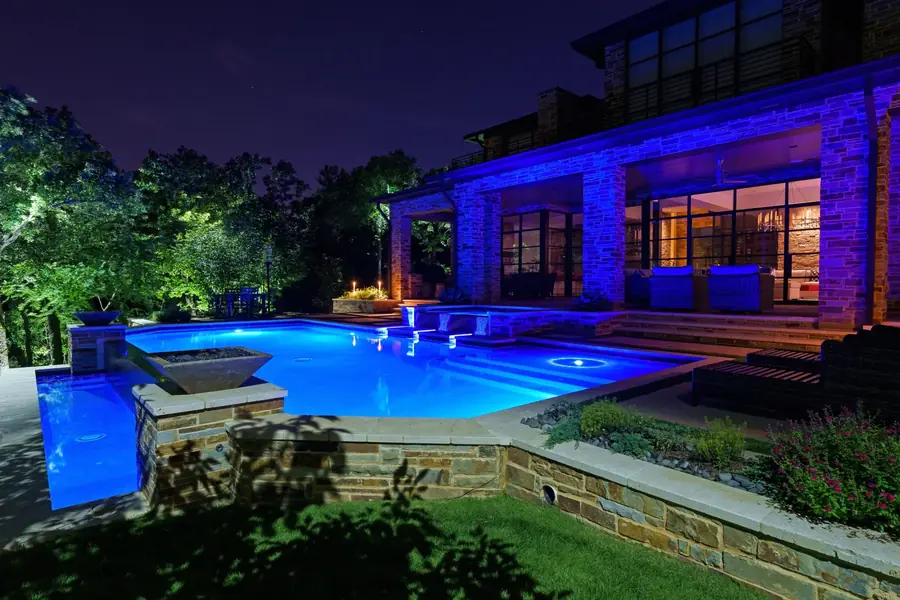
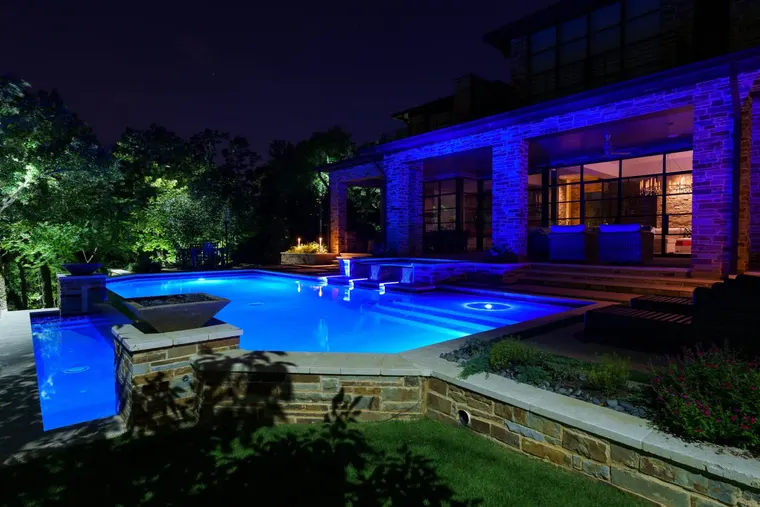
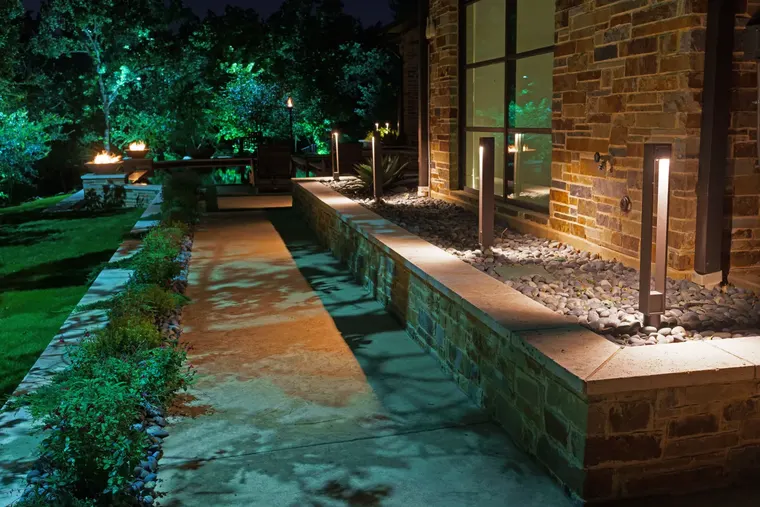
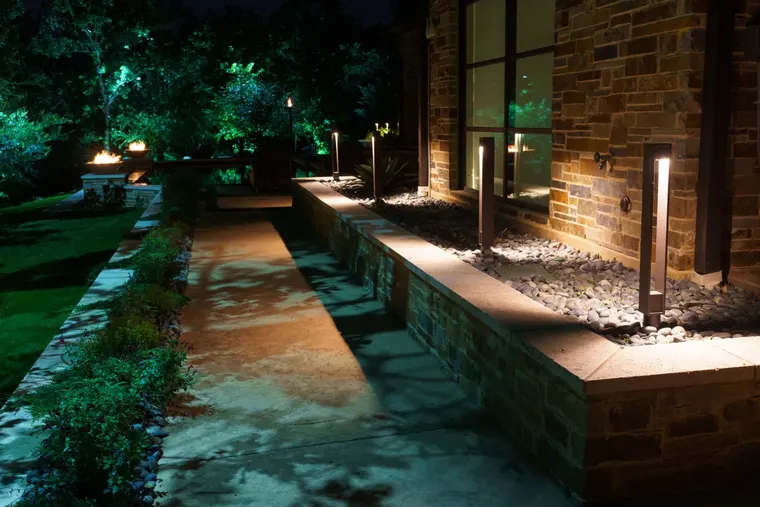
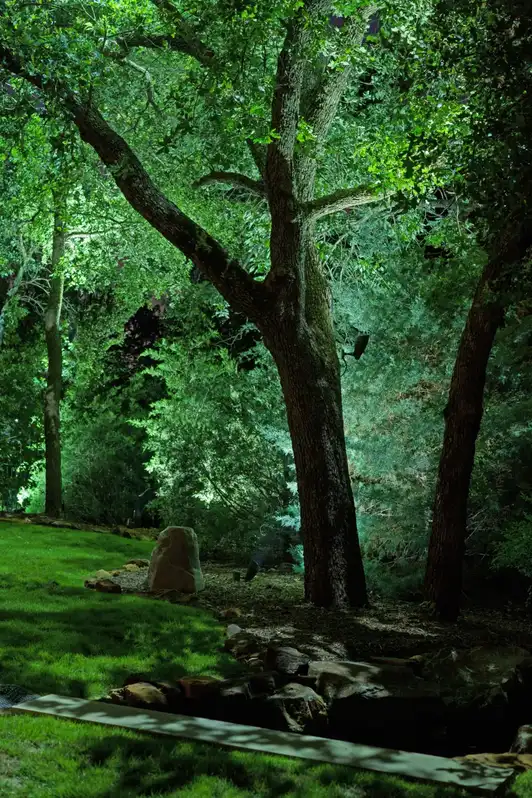
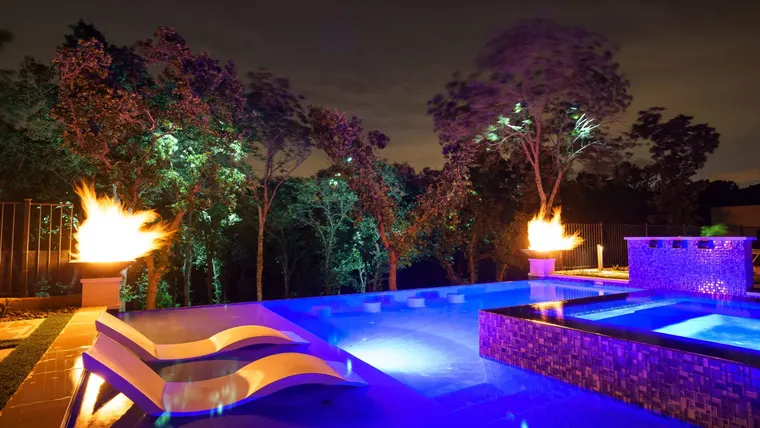
Twenty-seven photographed Flower Mound projects — the second-largest set in the library. Every one is a TC Lighting installation, shot on the property at night — no stock imagery and no renderings. Click any of them to see it full screen.





Flower Mound, TX — and How Far It Is From Us
North-west of Dallas, on the high ground between Grapevine Lake and Lewisville Lake. Free on-site design visit, and Todd comes out himself.
Flower Mound, TX · inside the TC Lighting service area · free on-site design visit
All Eight Services, Available in Flower Mound
Landscape lighting is the bulk of the work, but it is not all of it. Every service below is available on a Flower Mound property, from the same crew and the same licensed Texas electrical contractor.
Landscape Lighting
Design and installation — uplighting, moonlighting, path and specimen work.
Read more →Holiday Lighting
Seasonal install, maintained through the season, taken down and stored.
Read more →Permanent Festive LED
Govee-type colour-changing track set into the eave line. Invisible by day.
Read more →LED Conversion & Retrofit
Halogen to LED on an existing system, keeping the runs and fixtures worth keeping.
Read more →Pole, Site & Hardscape
Car parks, drives, steps, walls and seating areas, residential and commercial.
Read more →Interior Lighting
Inside work from the same licensed electrical contractor.
Read more →Ring Camera Installation
Cameras and doorbells fitted and wired properly.
Read more →Repair & Maintenance
Diagnosing and rebuilding failing systems, including ones we did not install.
Read more →Or start here: the home page for the whole picture, about Todd Cormier for who turns up, the photo gallery for the work itself, reviews for what clients say, and contact to reach us directly.
Flower Mound Landscape Lighting Questions
Twenty-seven photographed projects, which is the second-largest set in our library after Preston Hollow. They are all on the gallery page, grouped by town, every one shot after dark on the property.
Yes, genuinely. Flower Mound sits in the Eastern Cross Timbers — sandier, better drained soil rather than the expansive Blackland clay Dallas is built on. Fixtures hold their aim much better as a result. The trade-off is erosion on slopes, which is what exposes shallow cable here.
Route around driplines rather than through them, even when it means a longer run; use the least invasive method where something has to pass close; and mount so nothing girdles a limb as it grows. Post oak roots spread wider than the canopy and the tree is slow to show damage, so the caution has to come before the work, not after.
Voltage drop, almost certainly. Low-voltage cable loses voltage along its length and on an acre-plus lot with a long run the far fixture is being under-fed. It is a design fault rather than a fixture fault, and it is fixed with correctly sized cable, hub layouts instead of one long chain, and the transformer placed where the load actually is.
Flower Mound takes its trees seriously and the town sets the requirements, not us. Tell us at the design visit what applies to your property and the plan is built around it. We are not going to quote you thresholds from a web page — confirm the current rules with the town for your specific address.
Where Else Todd Works Near Flower Mound
- Landscape lighting in Colleyville
- Landscape lighting in Keller
- Landscape lighting in Southlake
- Landscape lighting in Dallas
- What the work involves, in detail — design, conduit, day-set and night-set.
- Repair and maintenance, including systems somebody else installed.
Ask Todd About Your Flower Mound Property
Four fields, about fifteen seconds. Send the address and what you are hoping to light. Todd walks the property himself, in daylight, and you get a written plan with a fixed price and dates before any work begins.
- Free, no-obligation design visit and written plan
- Licensed Texas Electrical Contractor — TECL 41495
- Conduit-protected wiring and daily site cleanup
- Every fixture day-set, and a night-set on most projects
Prefer to talk? Call (972) 345-1180.