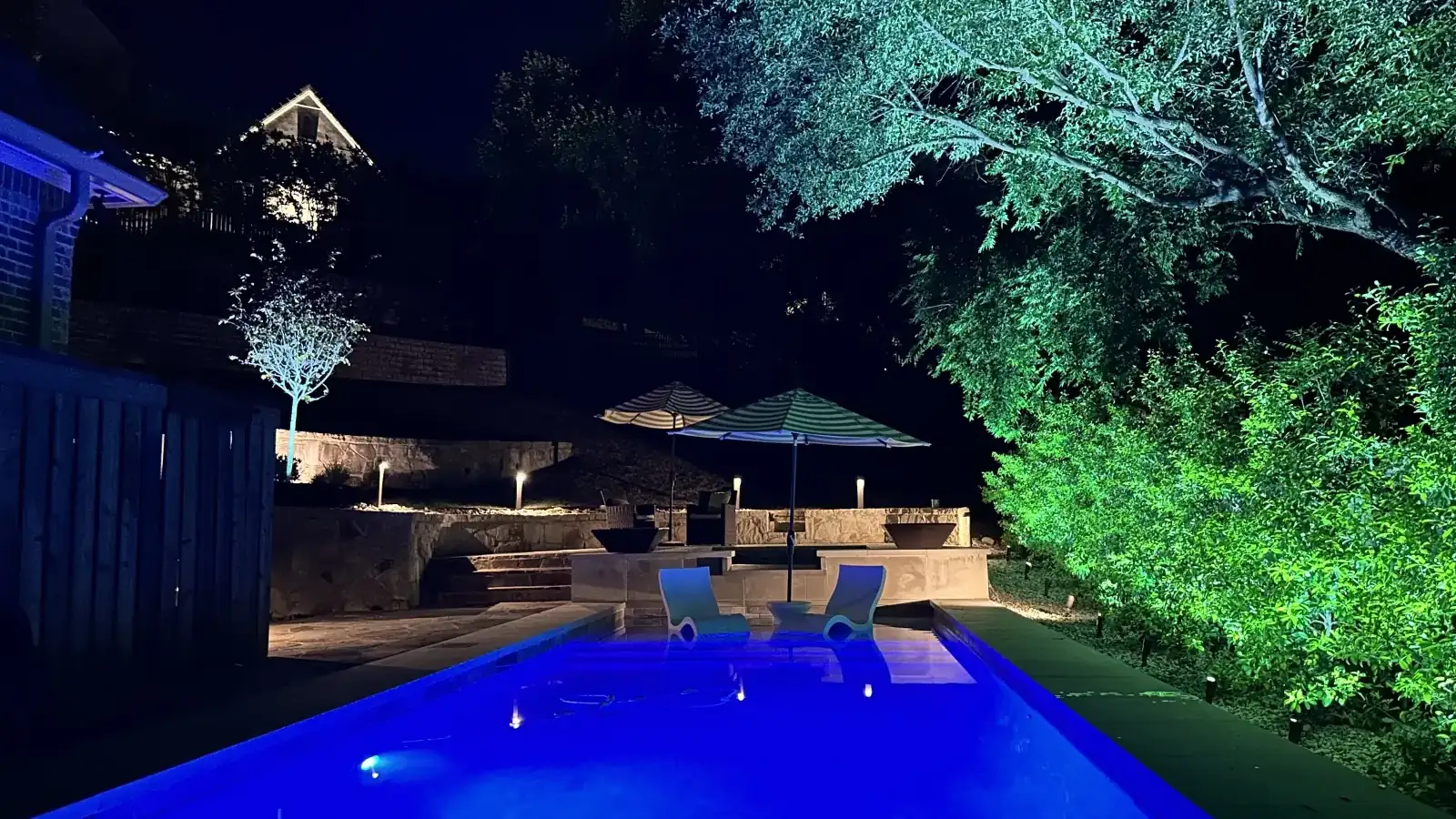
Landscape Lighting in Fort Worth, TX — Limestone, Bluffs and Post Oak
West of the Trinity the ground turns to rock and the land starts moving. Both change how a system gets built.
Fort Worth anchors the western half of the Metroplex, and it is the one part of it where the ground itself is a different material. Dallas sits on deep clay. West of the Trinity you are on limestone, often with only a few inches of soil over it, and the land has contour — bluffs, draws and real elevation change that most of the eastern Metroplex simply does not have.
That combination rewrites two things at once: how the wire gets into the ground, and what there is to light once it is there.
You Do Not Trench Limestone, You Work Around It
On the west side, rock is often close enough to the surface that a conventional trench is not an option for part of a run. The soil layer over the Goodland and Walnut formations can be shallow, and where it is, a spade finds rock in the first few inches.
This is the opposite problem to Dallas. Blackland clay is hard to dig in a drought but it is diggable everywhere; Fort Worth limestone is not diggable at all in places, and the answer is routing rather than force. Runs follow the softer ground, take advantage of bed lines and planting pockets where soil is deeper, and cross hard ground under existing hardscape or through a sleeve where one already exists. A design drawn without walking the property first will specify runs that cannot physically be cut.
The upside is that what you lose in trenching you gain in stability. Limestone does not shrink and swell the way clay does, so a fixture set properly on the west side tends to stay where it was put. Systems here drift out of aim far less than their equivalents across the county line.
If you have had a bid from somebody who never came out, or who quoted a flat per-foot trenching rate for the whole property, that is the number most likely to change once the digging starts.
Stone Wants Grazing Light, Brick Wants Washing
Fort Worth's older money built in stone. Westover Hills, Rivercrest, Monticello and the Mira Vista and Tanglewood streets are full of limestone and cut-stone elevations, native stone garden walls, stone piers and stone steps — and stone is the most rewarding surface in outdoor lighting because it has texture to find.
The technique is different from lighting brick. A wash — a wide, even flood from a distance — is what a flat brick elevation wants, because there is nothing to reveal and evenness is the goal. Stone wants the opposite: a fixture tucked close to the wall throwing light up across the face at a shallow angle, so every course, joint and tooled face casts its own small shadow. The wall stops being a surface and becomes a relief.
Where it goes wrong is distance. The same fixture pulled two metres back from a stone wall flattens it completely and you have paid for texture you cannot see. On a property with both materials, which many Fort Worth houses have, the two get lit deliberately differently rather than with one repeated fixture spacing.
The other Fort Worth gift is contour. A bluff lot or a stepped terrace lets you put light at several heights and let the eye travel, which is something a flat Plano lot cannot offer at any budget.
Post Oak Country Starts at the City's Edge
North and west of the city the Metroplex crosses into the Eastern Cross Timbers, and the dominant native tree changes from live oak and pecan to post oak and blackjack oak. Anyone lighting on that side of town needs to understand the difference, because post oak is not a tree you treat casually.
Post oak has a shallow, wide root system and very little tolerance for disturbance. It does not like its grade changed, it does not like trenching inside the dripline, and when it declines it does so slowly enough that nobody connects the decline to the work that caused it three summers earlier. A mature post oak is also effectively irreplaceable on a human timescale — they grow slowly and transplant poorly.
So on a post oak property the wire routes around driplines rather than through them, anything that has to pass near a tree goes in by the least invasive means available, and mounting hardware goes on in a way that does not girdle. The canopy is more open and more gnarled than a live oak's, which makes it a less generous moonlighting host and a far better subject for uplighting the branch structure itself — those crooked limbs are the feature.
What Turns Up on an Older West-Side System
A good share of the Fort Worth enquiries that reach us are not new installations. They are a system somebody put in ten or fifteen years ago that has stopped being reliable, and the owner is deciding between repairing it and starting again.
Usually it is worth repairing, and usually the same handful of things are wrong:
- Halogen still in the ground. A twelve-year-old system is often still running halogen lamps, drawing five to ten times the wattage of the LED equivalent and cooking its own sockets. Converting the lamps is frequently the single best-value thing that can be done to an old system, and the existing cable and fixtures often survive it.
- Corroded connections at the fixture. The classic failure. A connection that was twisted and taped rather than properly made gives up somewhere between year three and year eight, and the symptom is one fixture out, then two.
- A transformer that was at its limit on day one. Add a few fixtures over the years and it runs hot and fails early.
- Runs laid bare across ground that has since been landscaped. Which is why the fault is usually exactly where somebody put a new bed in.
We diagnose before quoting, keep whatever is sound — sound cable and solid brass fixtures often outlive two sets of lamps — and say plainly when something is not worth keeping. There is more on that on the repair and maintenance and LED conversion pages.
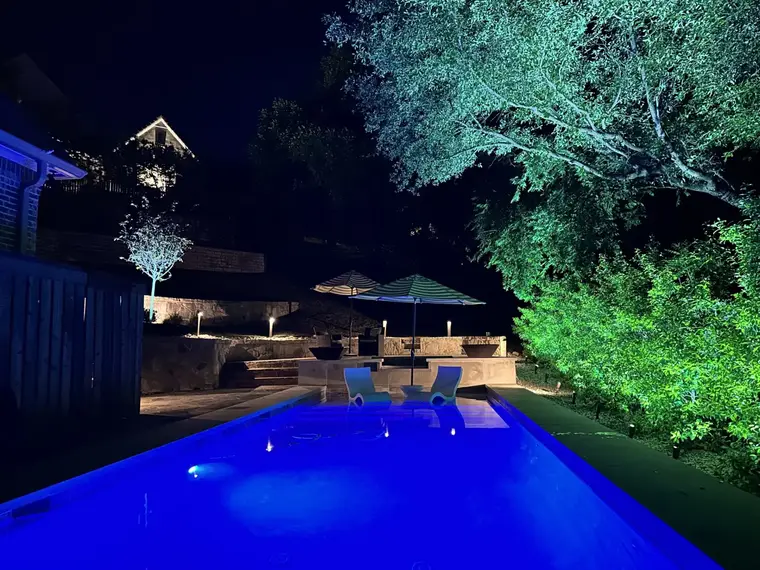
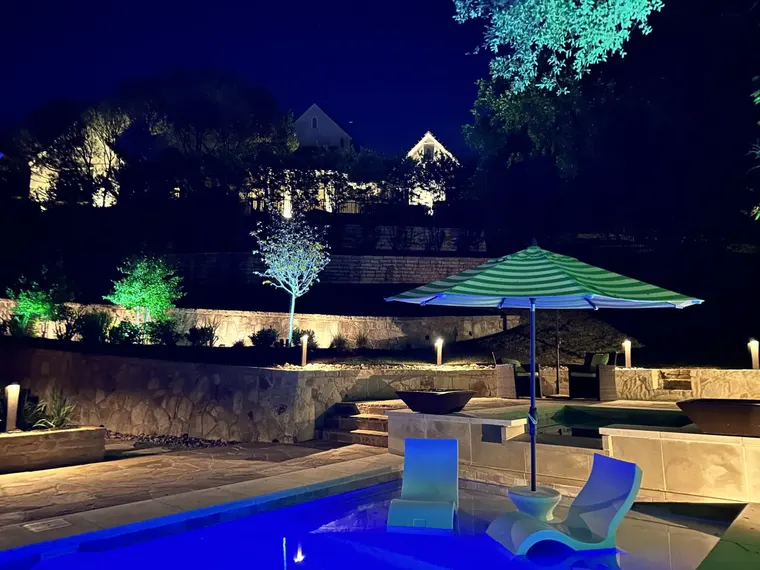
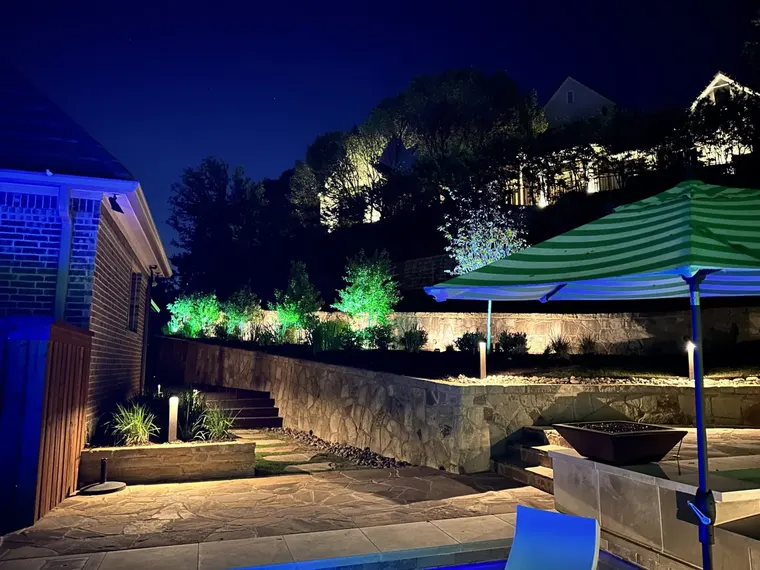
Photographed After Dark in Fort Worth
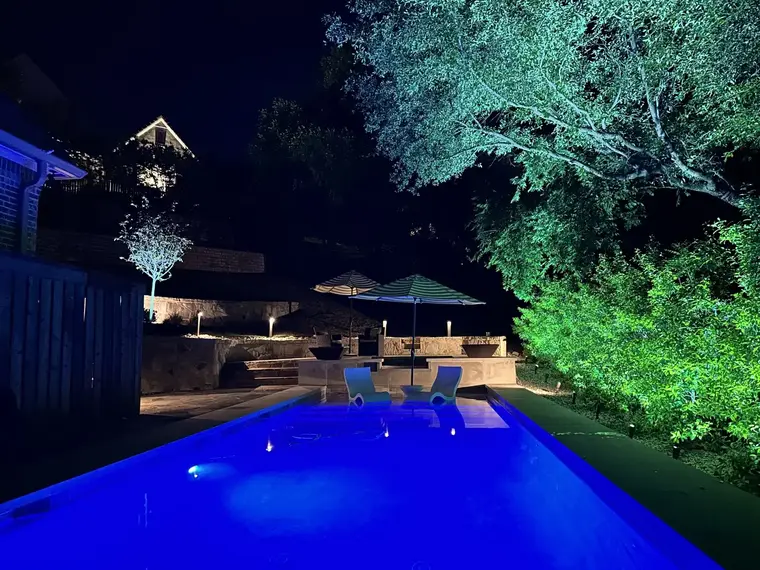
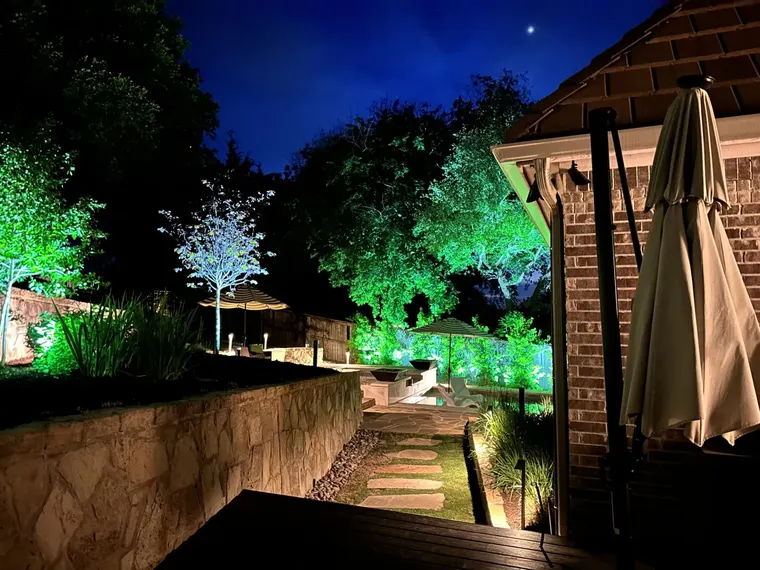
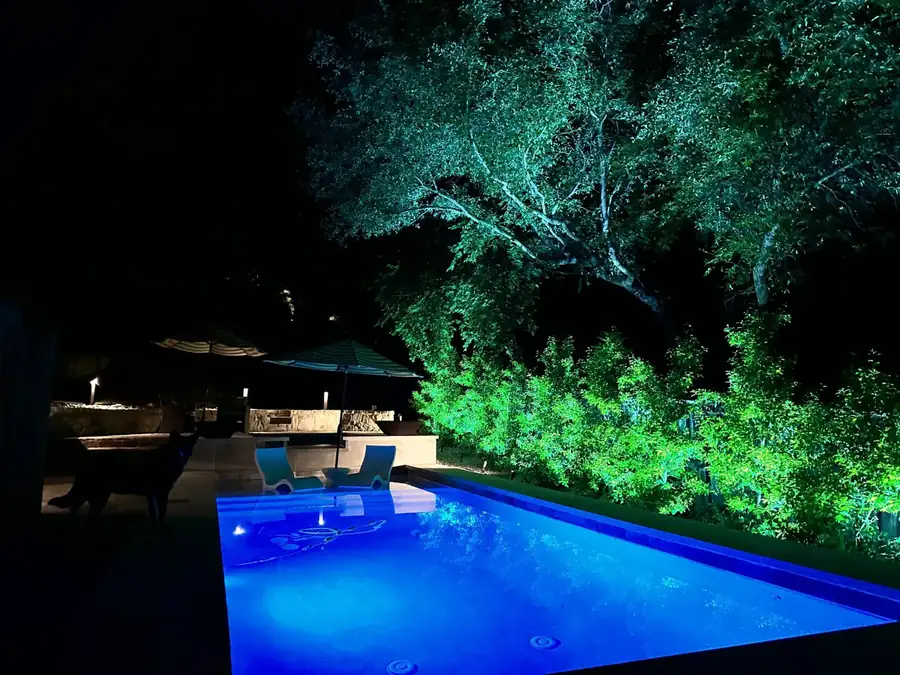
Six photographed Fort Worth projects are in the library. Every one is a TC Lighting installation, shot on the property at night — no stock imagery and no renderings. Click any of them to see it full screen.
Fort Worth, TX — and How Far It Is From Us
Fort Worth anchors the western half of the Metroplex, and a job here is scheduled as continuous days on site. Free on-site design visit, and Todd comes out himself.
Fort Worth, TX · inside the TC Lighting service area · free on-site design visit
All Eight Services, Available in Fort Worth
Landscape lighting is the bulk of the work, but it is not all of it. Every service below is available on a Fort Worth property, from the same crew and the same licensed Texas electrical contractor.
Landscape Lighting
Design and installation — uplighting, moonlighting, path and specimen work.
Read more →Holiday Lighting
Seasonal install, maintained through the season, taken down and stored.
Read more →Permanent Festive LED
Govee-type colour-changing track set into the eave line. Invisible by day.
Read more →LED Conversion & Retrofit
Halogen to LED on an existing system, keeping the runs and fixtures worth keeping.
Read more →Pole, Site & Hardscape
Car parks, drives, steps, walls and seating areas, residential and commercial.
Read more →Interior Lighting
Inside work from the same licensed electrical contractor.
Read more →Ring Camera Installation
Cameras and doorbells fitted and wired properly.
Read more →Repair & Maintenance
Diagnosing and rebuilding failing systems, including ones we did not install.
Read more →Or start here: the home page for the whole picture, about Todd Cormier for who turns up, the photo gallery for the work itself, reviews for what clients say, and contact to reach us directly.
Fort Worth Landscape Lighting Questions
Yes, regularly, and we have photographed projects there. Fort Worth is the far side of the Metroplex from us, which changes scheduling rather than willingness — a Fort Worth job gets planned as continuous days on site rather than split across a fortnight, which is better for you anyway.
Often, yes. West of the Trinity limestone can sit within inches of the surface and there are runs that genuinely cannot be cut on the straight line. It is a routing problem, not a reason to abandon the design: runs follow deeper soil, use bed lines and planting pockets, and cross hard ground under existing hardscape or an existing sleeve.
It makes it slower in places, which is why we walk the property before quoting rather than pricing trenching per foot from a satellite image. You get a fixed written price with a start and completion date before any work begins, and that price accounts for what Todd actually saw on the ground.
Close in and shallow, so the light rakes across the face and every joint and tooled surface throws its own shadow. Pulling the same fixture back a couple of metres turns a textured stone wall into a flat grey panel. Brick is the opposite — it has little texture to reveal, so an even wash from further back suits it better.
Yes, and it matters. Post oak has shallow, spreading roots and poor tolerance for disturbance, and decline shows up years after the damage. We route wire around driplines rather than through them and mount without girdling. Their open, crooked branch structure is also worth uplighting in its own right rather than treating as a moonlighting host.
Generally yes, and it is the ground rather than the workmanship. Limestone does not shrink and swell the way Blackland clay does, so fixtures set properly on the west side drift far less. A Dallas system wants re-aiming every year or two; a Fort Worth one usually asks for it less often.
Where Else Todd Works Near Fort Worth
- Landscape lighting in Colleyville
- Landscape lighting in Southlake
- Landscape lighting in Keller
- Landscape lighting in Arlington
- What the work involves, in detail — design, conduit, day-set and night-set.
- Repair and maintenance, including systems somebody else installed.
Ask Todd About Your Fort Worth Property
Four fields, about fifteen seconds. Send the address and what you are hoping to light. Todd walks the property himself, in daylight, and you get a written plan with a fixed price and dates before any work begins.
- Free, no-obligation design visit and written plan
- Licensed Texas Electrical Contractor — TECL 41495
- Conduit-protected wiring and daily site cleanup
- Every fixture day-set, and a night-set on most projects
Prefer to talk? Call (972) 345-1180.